
Engineered with purpose. Built to a higher standard
QSO Director isn't simply developed - it's designed, engineered and ultimately accountable to an experienced human being.
Designed and developed by James Thresher, M0YOM, QSO Director brings more than 30 years of professional software engineering experience to amateur radio.
Every major product, design and engineering decision is made with a clear purpose: to create powerful amateur-radio software that's reliable, intuitive, responsive and built for the long term.
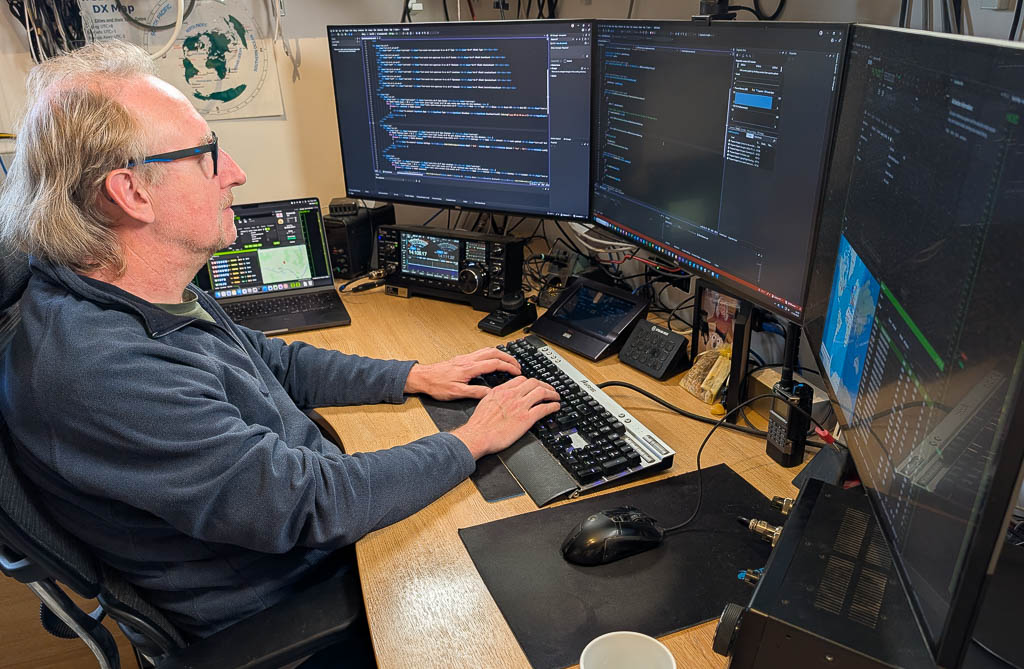
Professional software engineering
Licensed radio amateur
Large logbook testing
Windows · macOS · Linux
Designed by judgement, not just specification
Understand the problem
Design the experience
Engineer the solution
Good software isn't created simply by implementing a list of features.
Every new QSO Director capability starts by understanding the problem an operator is trying to solve. Only then is the user experience designed: what should happen, what information matters, what complexity can be removed, and how the feature should fit into the rest of the product.
Sometimes that means saying no to a requested feature. More often it means understanding the problem behind the request and finding a better solution.
And sometimes it means discarding substantial development work and starting again because something technically works but simply isn't good enough.
Those decisions require judgement - and responsibility for those decisions belong to a real human engineer.
"Understand the problem. Design the experience. Engineer the solution."
More than a feature list
Adding features is relatively easy. Building a product where hundreds of capabilities work together coherently is much harder.
QSO Director was designed from the outset as a substantial, cross-platform software product capable of growing far beyond a conventional electronic logbook.
Features are designed as parts of a wider system rather than isolated additions. Decisions made today consider not only what QSO Director needs to do now, but where the product is going over the coming years.
DESIGNED AS A SYSTEM
BUILT FOR PERFORMANCE
COMPLEXITY IS OPTIONAL
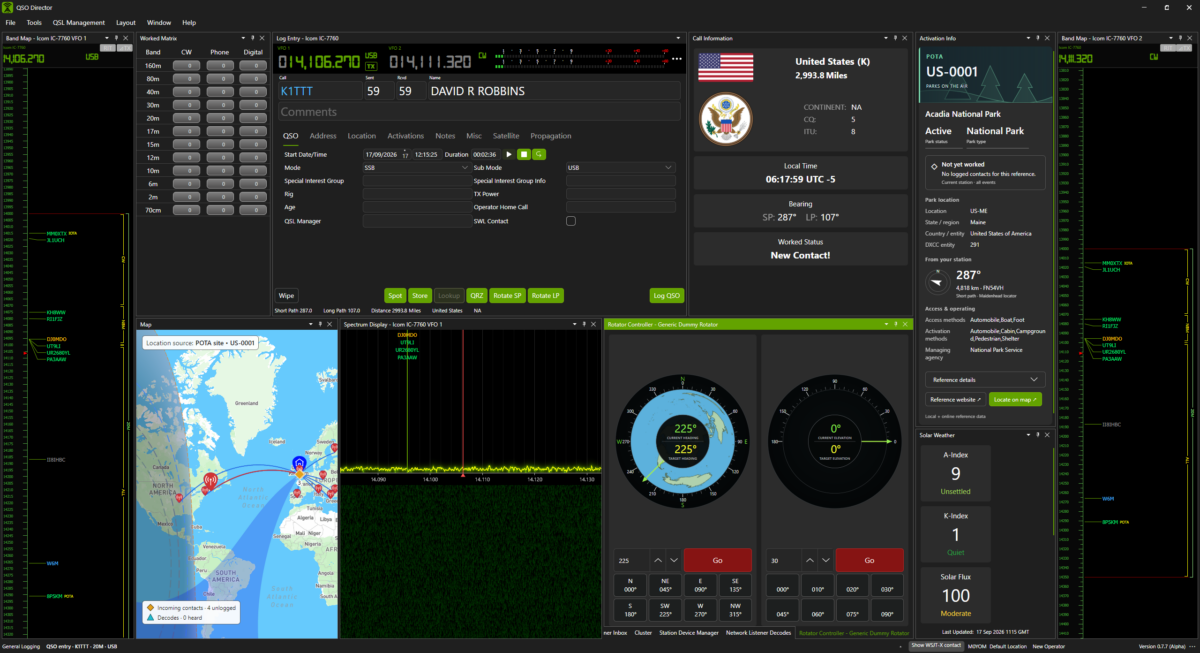
The best engineering often disappears
Most of QSO Director's engineering should never require the operator to think about it.
You shouldn't need to understand how a database query has been optimised to notice that callsign lookups don't interrupt your typing. You shouldn't need to understand graphics processing to appreciate a responsive spectrum display. And you shouldn't have to understand synchronisation architecture to expect your log to remain consistent when an internet connection disappears.
These are engineering problems. The objective is to make their solutions feel ordinary.
Fast interaction · Responsive UI · Large logbooks · Real-time hardware · Cloud synchronisation · Cross-platform
Designed for real stations
Hardware integration is one of the foundations of QSO Director.
Modern amateur-radio stations can contain transceivers, amplifiers, rotators, antenna switches and other equipment from numerous manufacturers, connected through serial, USB, network and other interfaces.
QSO Director's hardware capabilities have been engineered specifically for that environment, with the aim of providing responsive control, rich device information and deeper integration with supported equipment.
Wherever appropriate, implementations are developed against manufacturer documentation and available technical references, then validated against real-world hardware and feedback from operators.
When something doesn't behave as expected, QSO Director includes diagnostic capabilities that allow communication with connected equipment to be investigated rather than relying purely on guesswork.
Supporting a device means more than making a frequency display change. The objective is to understand and expose the capabilities that make that equipment useful as part of an integrated station.
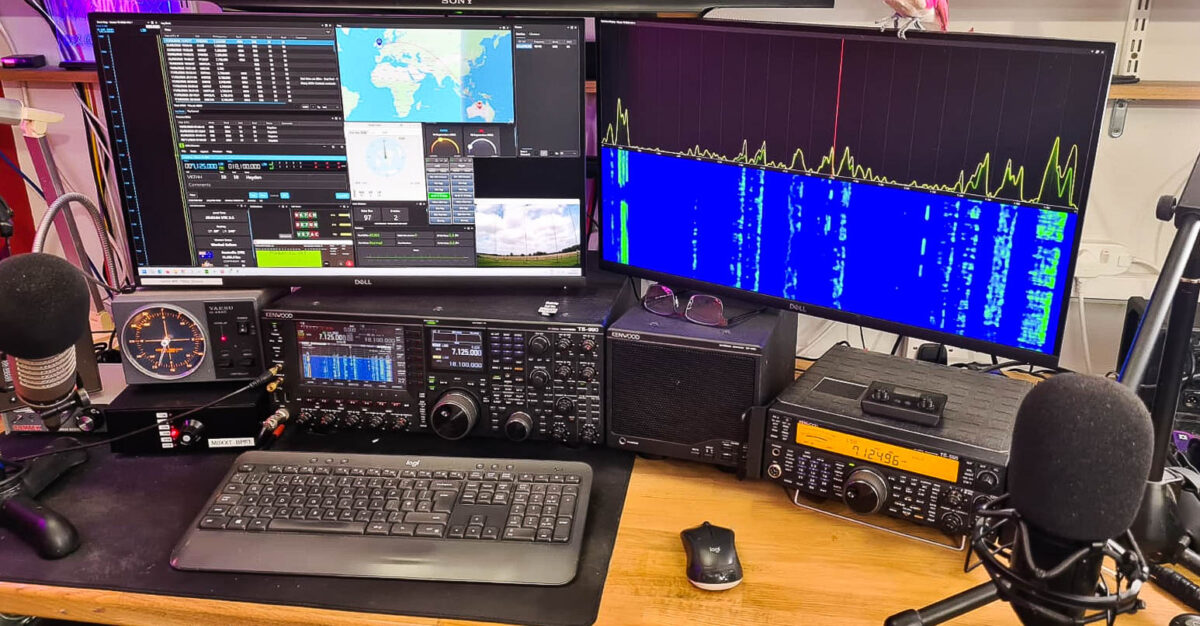
QSO Director operating as part of a real multi-radio station
DEEPER INTEGRATION
REAL-WORLD VALIDATION
BUILT TO BE DIAGNOSABLE
Some QSOs can't simply be worked again
That rare DX contact. The multiplier that changed a contest result. Decades of operating history.
To a computer they're database records. To a radio amateur they're much more than that.
TRANSACTIONAL DATABASE OPERATIONS
INTERRUPTION-TOLERANT CLOUD SYNC
TESTED BEYOND 5 MILLION QSOs
"Protecting your log isn't a feature. It's a responsibility."
Cross-platform by design. Not by accident
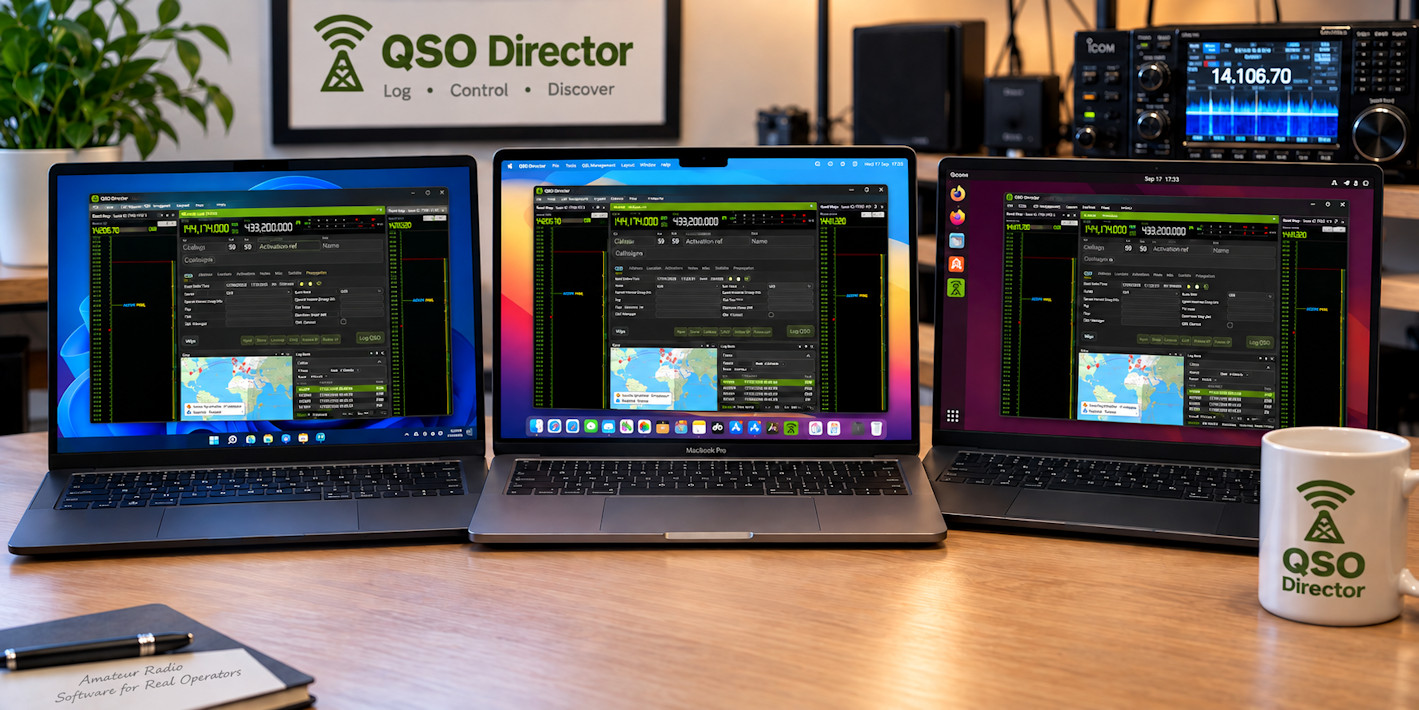

Windows

macOS

Linux
Cross-platform support was part of QSO Director's architecture from the beginning. Changes that can affect platform compatibility are tested across Windows, macOS and Linux.
Good enough isn't good enough
Sometimes the hardest engineering decision is throwing work away.
The WSJT interface, for example, has been redesigned and started again multiple times when an implementation didn't meet the required standard.
Substantial development effort isn't a reason to ship something that isn't good enough.
Ultimately, someone is responsible for what ships.
Product design, architecture, implementation decisions, code review, testing and the decision that something is ready for customers remain under human engineering control.
James personally reviews and takes responsibility for the code that becomes part of QSO Director.
Technology assists the engineering. It doesn't replace the engineer.
Meet the engineer
James Thresher, M0YOM
Software engineer · Technology leader · Radio amateur
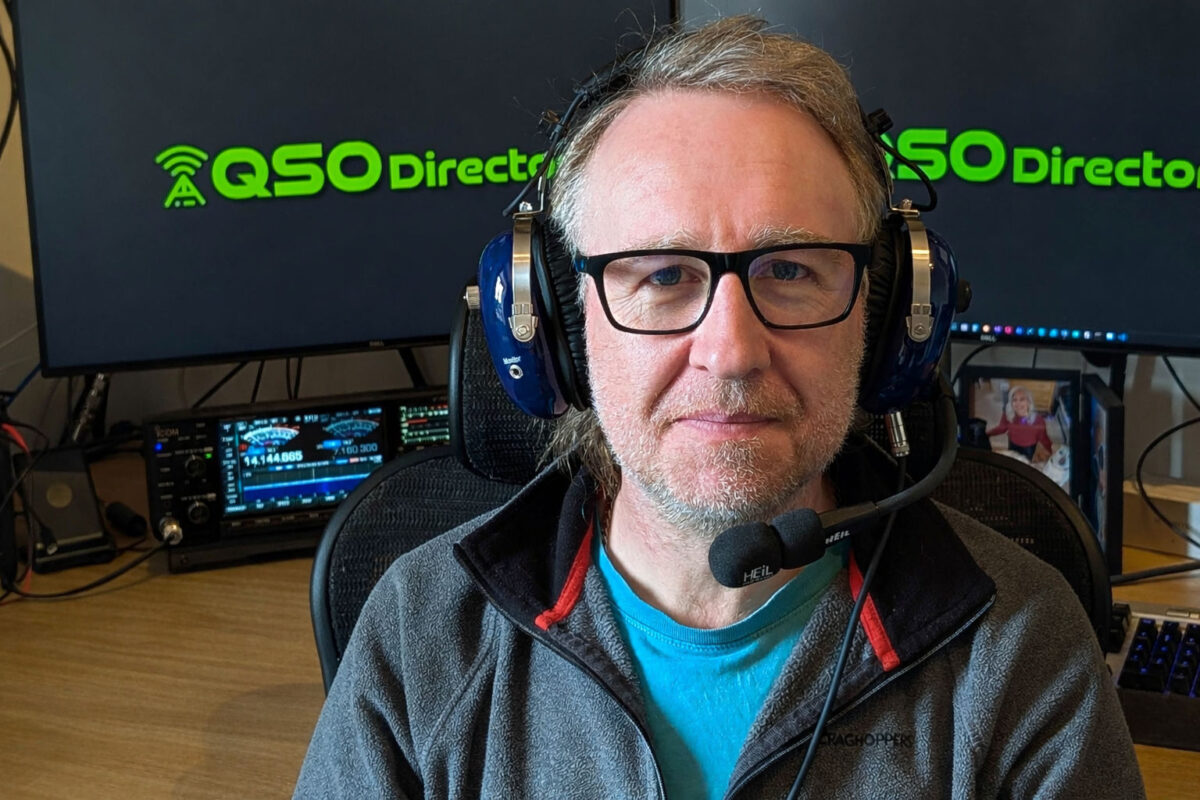
James has been programming for most of his life.
He started at the age of six on an Acorn Electron and was paid for his first commissioned software development at just eleven. During his teenage years he provided IT consultancy to local organisations before beginning his full-time commercial software career at eighteen.
That career would eventually span more than 30 years of software design, architecture, development, R&D and product delivery.
Nearly 20 years building a software company
The software James originally architected at Jaama grew over almost two decades into a comprehensive business platform for the automotive sector supporting business-critical operations at major global organisations. By the time Jaama Ltd was sold, the company was a multi-award winning market leader, employing around 110 people across two sites.
The core software architecture James originally designed at Jaama remained the foundation of its commercial product as the company and its customers grew for almost two decades.
That experience - seeing architectural decisions survive nearly 20 years of real-world product development strongly influences the way QSO Director is designed today.
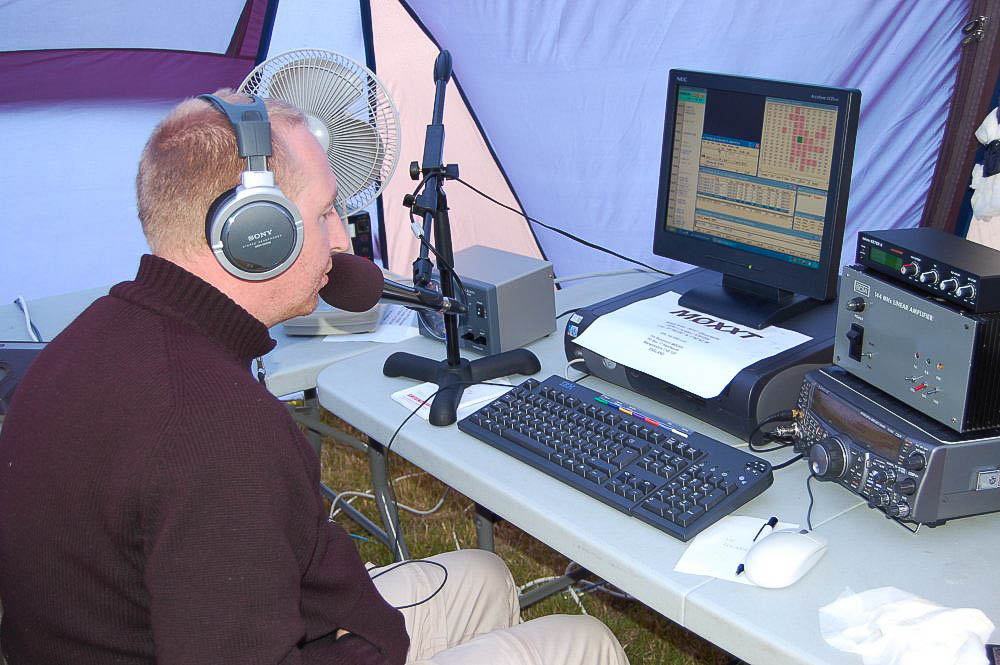
M0YOM Operating during VHF National Field Day 2008
Engineering experience meets operating experience
30+ years engineering plus 19+ years radio
James has also been a licensed radio amateur for more than 19 years.
As M0YOM, his interests include contesting, DXing, antenna experimentation, station design and automation - particularly finding ways to extract the maximum performance from a station.
His amateur-radio software development also predates QSO Director.
He created ACOM Director, an independent application for controlling ACOM amplifiers, and earlier developed Contest Director, an experimental contesting application in which a number of ideas that would eventually influence QSO Director were first explored.
Some of those ideas date back to 2008.
James has also spent many years experimenting with antennas and station design.
QSO Director isn't an interpretation of what amateur-radio software might need to do. It's being built by someone who actually wants to use it.
Professional standards. Accessible pricing.
James previously engineered software used in business systems costing hundreds of thousands of pounds.
QSO Director applies the same expectation of thoughtful design, reliability, scalability and support to software intended for individual radio amateurs.
Its accessible price comes from a very different business model - not from setting a lower standard for the product.
This isn't a side project
QSO Director is my full-time professional focus.
Development is guided by a multi-year product strategy covering the capabilities and foundations QSO Director will need as it continues to grow.
Short-term decisions are considered against that longer-term direction, while pragmatic decisions are made where they're necessary to deliver useful capabilities today.
The intention is straightforward: to continue developing QSO Director for many years and build a sustainable software company dedicated to producing exceptional products for radio amateurs.
A PERSONAL COMMITMENT
When I put my name on QSO Director, I take responsibility for it
When you choose to pay for QSO Director, I believe that creates an obligation on my side too.
You're trusting me to have thought carefully about what I'm building, to understand the code and engineering behind it, to test it properly, to investigate things when they go wrong, and to keep improving it.
You're trusting QSO Director with more than database records.
You're trusting it with the rare DX contact you might never get another opportunity to work. The multiplier that matters during a contest. Perhaps decades of your operating history.
And you're trusting the software to be part of something you do for enjoyment.
Radio amateurs spend considerable time and money choosing equipment that's capable, reliable and enjoyable to operate. I believe the software sitting alongside that equipment deserves the same consideration.
I won't claim QSO Director will always be perfect. Software doesn't work that way.
What I can promise is that I care about getting it right, that I'm prepared to redesign something when it isn't right, that I'll continue learning from the people using it, and that I take personal responsibility for the product I put my name to.

James Thresher, M0YOM
Founder & Developer, QSO Director